Influence Trading House
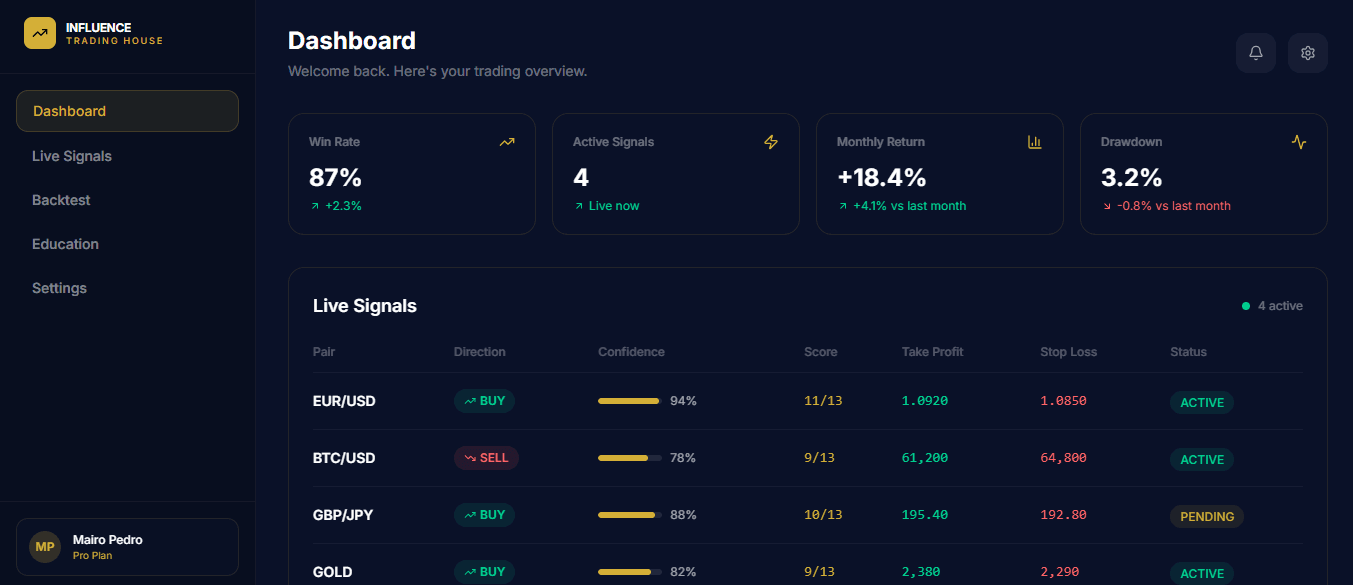
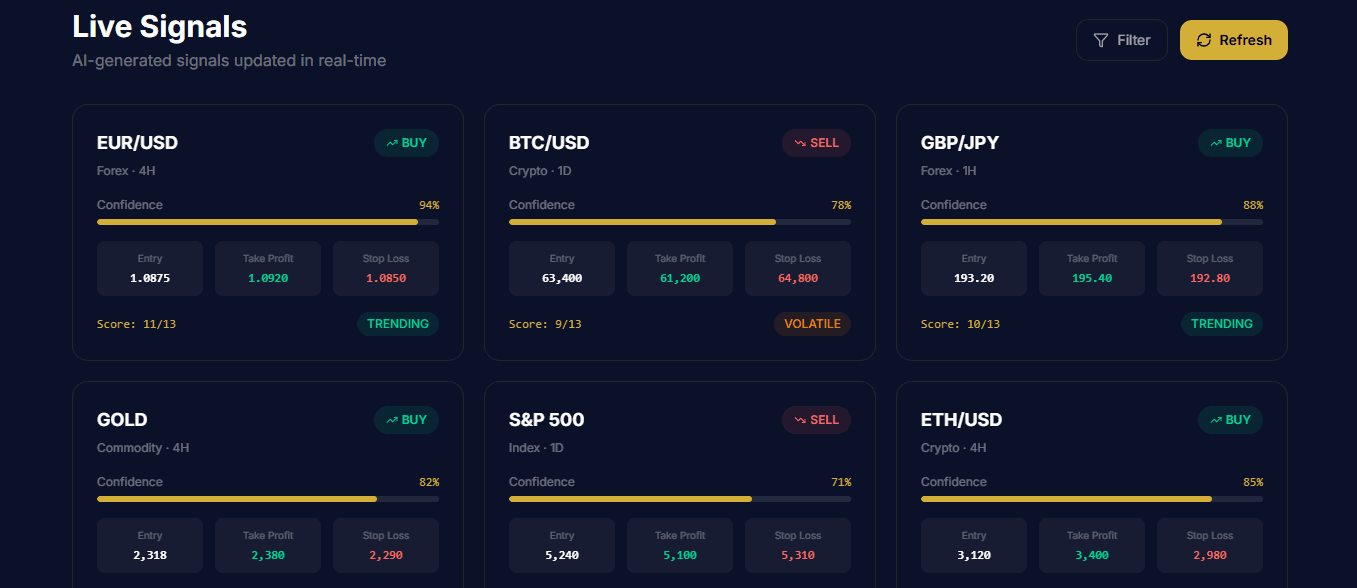
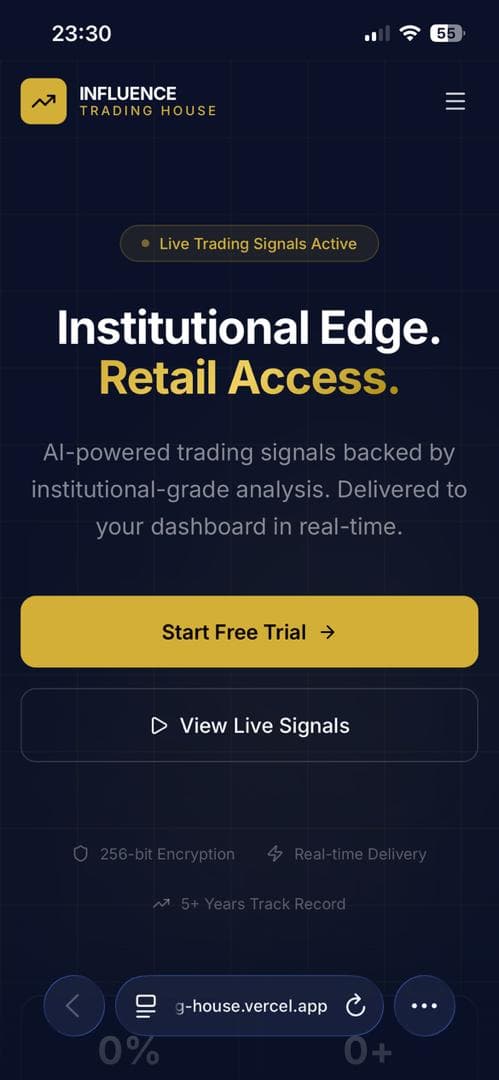
AI-powered trading intelligence platform built to institutional standards — dark luxury design with glassmorphism, live signal dashboards, backtesting, and financial education. Built for serious traders.
Desktop Views


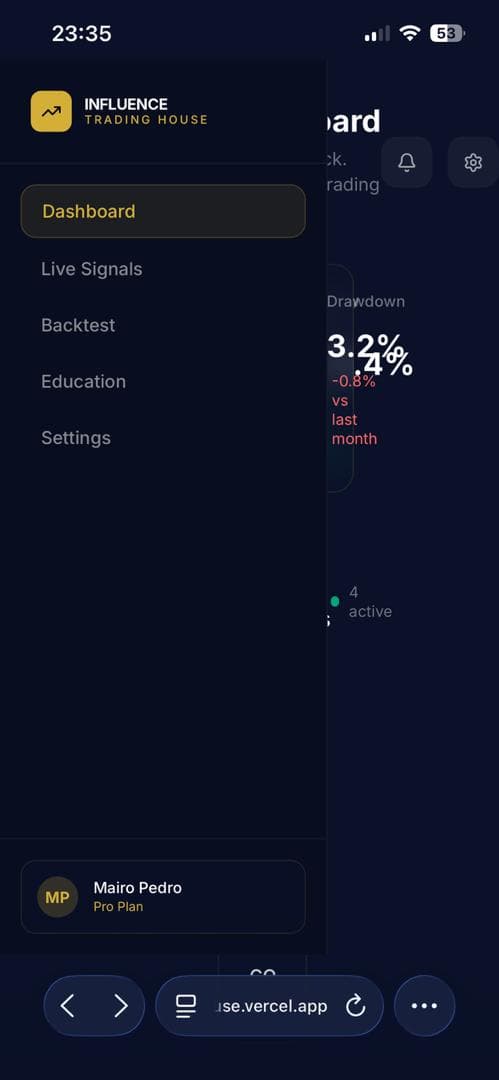
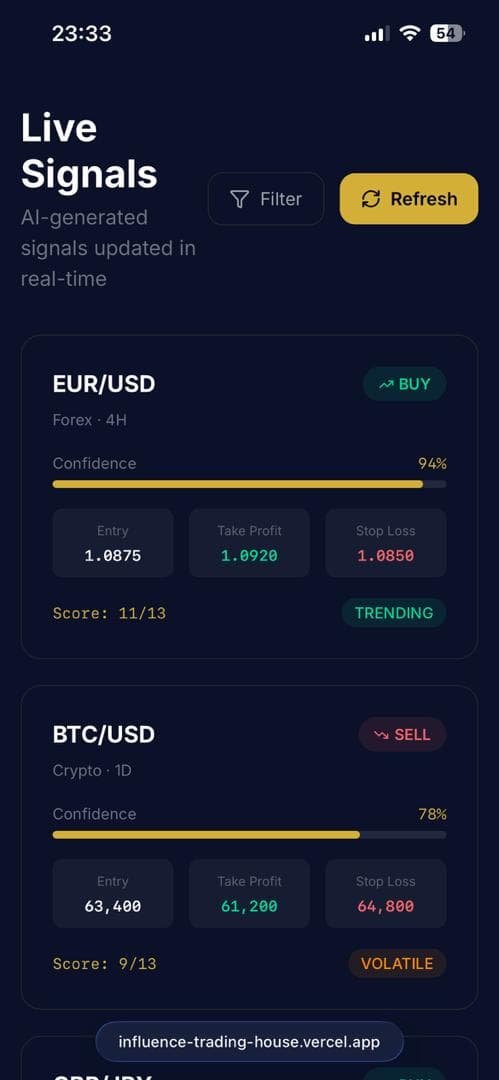
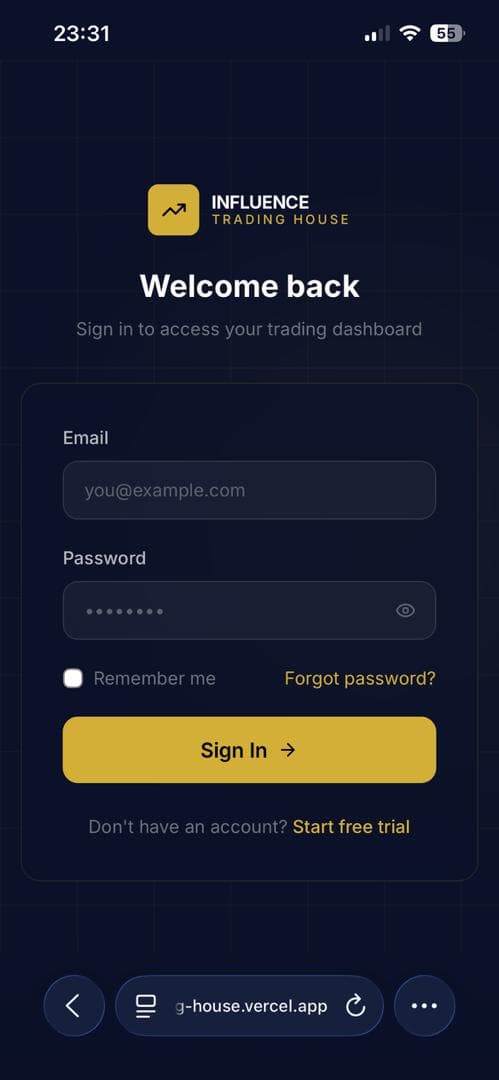
Mobile Views

The Problem
Most retail trading platforms suffer from the same issues — cluttered interfaces, generic design, and no clear signal methodology. Traders are either overwhelmed with noise or undersupported with tools that institutional players take for granted. The goal was to build something that feels like it belongs in a Bloomberg terminal room, not a casino.
The Solution
Built a premium frontend in Next.js 15 with TypeScript and TailwindCSS v4 — dark navy and metallic gold brand identity, glassmorphism card system, live signal dashboards with confidence scores, backtest configuration panels, and a full education module. Phase 1 is a fully wired frontend; Phase 2 connects a Django + PostgreSQL backend with real signal data.
Problems Solved
TailwindCSS v4 breaking changes — npx tailwindcss init no longer exists, @tailwind directives removed entirely
Replaced all three @tailwind directives with a single @import "tailwindcss" and removed tailwind.config.ts dependency entirely — v4 reads config from CSS
@apply inside @layer base threw build error: "Cannot apply unknown utility class" after switching to v4 import syntax
Replaced every @apply rule with equivalent plain CSS properties — background-color, color, font-family, -webkit-font-smoothing — making styles more explicit and debuggable
Google Fonts @import caused build failure at line 1248 — but globals.css only had 98 lines
Removed Google Fonts @import url() entirely since Inter and JetBrains Mono were already loaded via next/font/google in layout.tsx — two font systems were running in parallel
Next.js 15 App Router hydration errors from components using useState, useEffect, and useRouter without 'use client' directive
Established a clear rule: any component with interactivity or state gets 'use client'. Pure display components (Features, Testimonials) remain server components by default
All components depended on auth state (nav behavior, CTA buttons, plan badges) but no backend existed for Phase 1
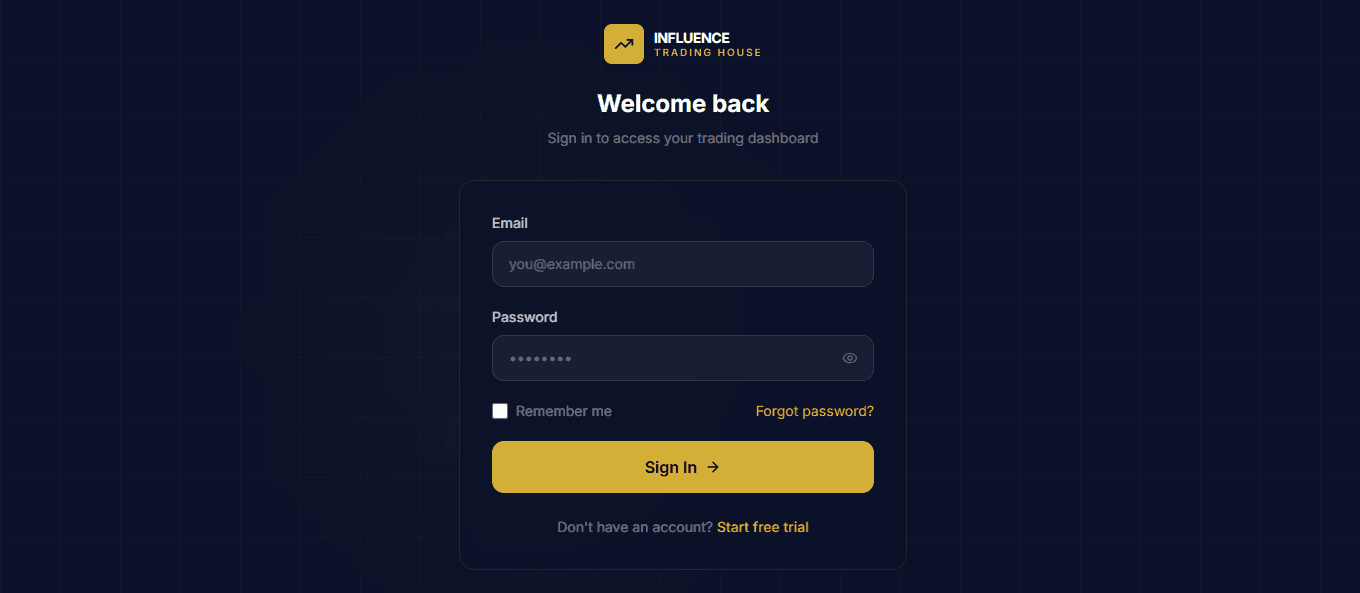
Built a mock AuthContext mirroring the exact TypeScript interface of a real auth system — user, profile, loading, openAuthModal, signOut. Swapping in real Supabase only requires changing the context file
Git push to GitHub failed with fatal TLS error: "error:0A000152:SSL routines::unsafe legacy renegotiation disabled"
Updated Git SSL backend with git config --global http.sslBackend schannel — instructs Git to use Windows native SChannel instead of the OpenSSL library bundled with Git for Windows
Tech Stack
The Result
Influence Trading House Phase 1 is fully deployed on Vercel — a complete, responsive fintech frontend demonstrating institutional-grade design at retail access. The platform features a glassmorphism design system, live signal UI, backtest panel, education module, and mock auth context ready for real backend integration. Phase 2 will connect Django + PostgreSQL with live signal data, and Phase 3 introduces an ML pipeline with scikit-learn, XGBoost, and FinBERT sentiment scoring.
What's Next
Django + PostgreSQL backend with real signal data
ML pipeline — scikit-learn, XGBoost, FinBERT sentiment
Stripe + MTN MoMo payment integration
QuantConnect strategy integration and live trading
Interested in fintech? Let's connect.
Building a trading platform, fintech product, or need a full-stack engineer? Let's talk.
Get In Touch