NephroSasa Rwanda
A Web-Based Longitudinal Kidney Risk-Classification, Health-Record Tracking, and Teleconsultation Platform for Hypertensive and Type 2 Diabetic Patients in Rwanda.
Powered by a Random Forest machine learning pipeline (84.94% accuracy), encrypted QR-code medical history exchange, automated clinical email alerts, and seamless nephrologist teleconsultations.
System Capabilities
Core Architectural Features
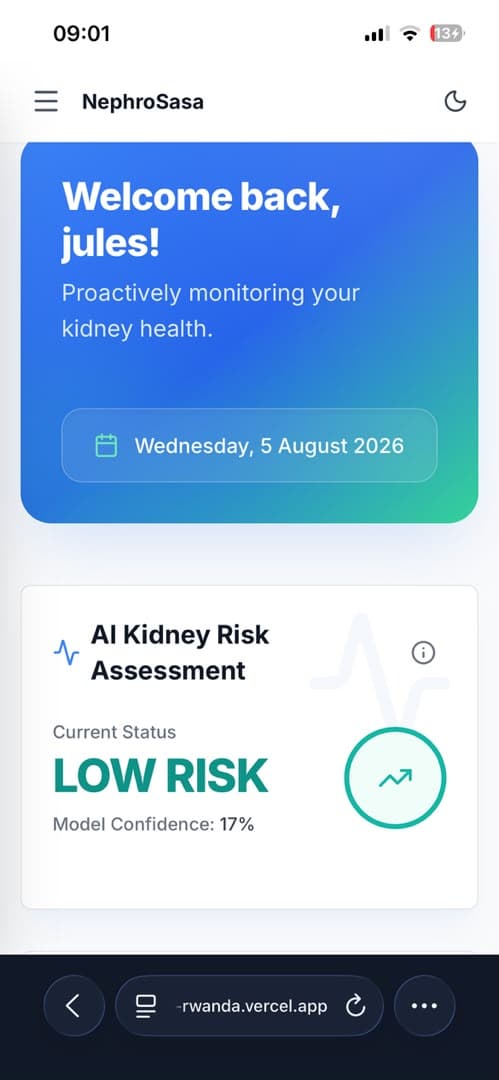
Longitudinal AI Risk Scoring
Random Forest machine learning model evaluates 10 clinical vitals over time to classify pre-dialysis kidney disease risk into Low, Medium, or High.
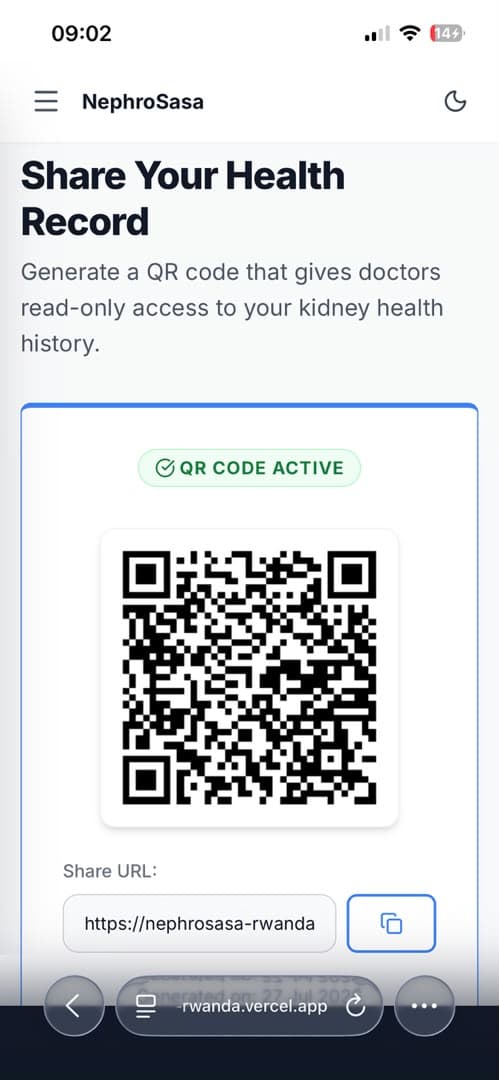
Encrypted QR Health Record Sharing
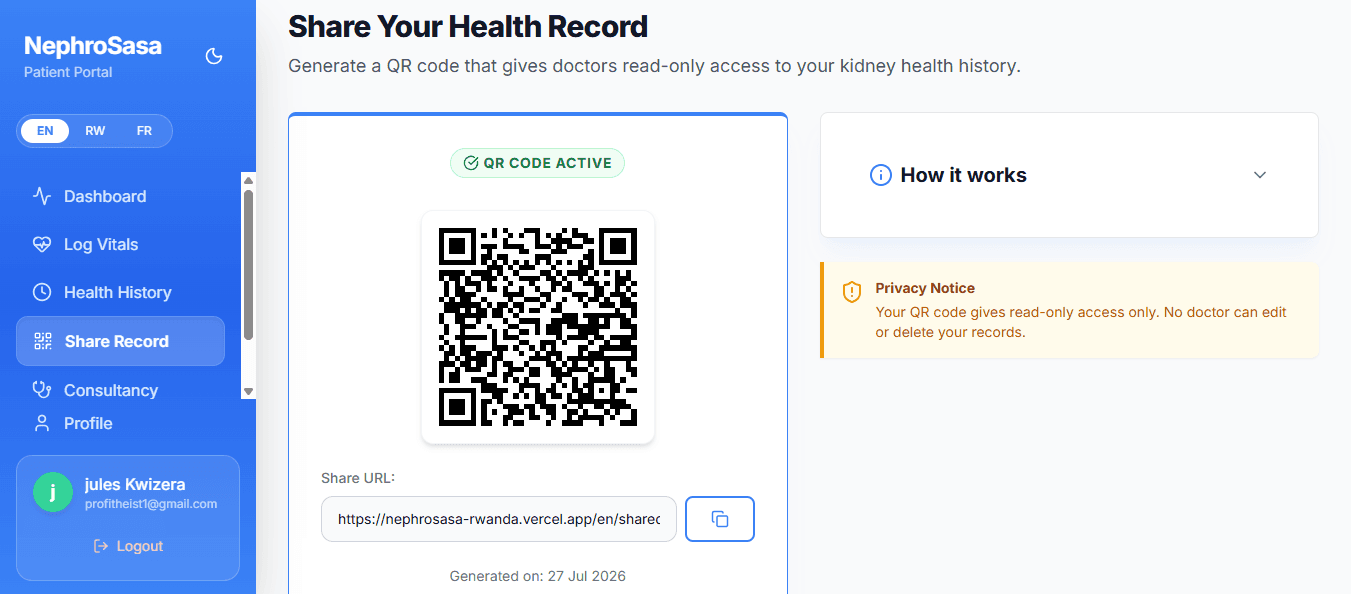
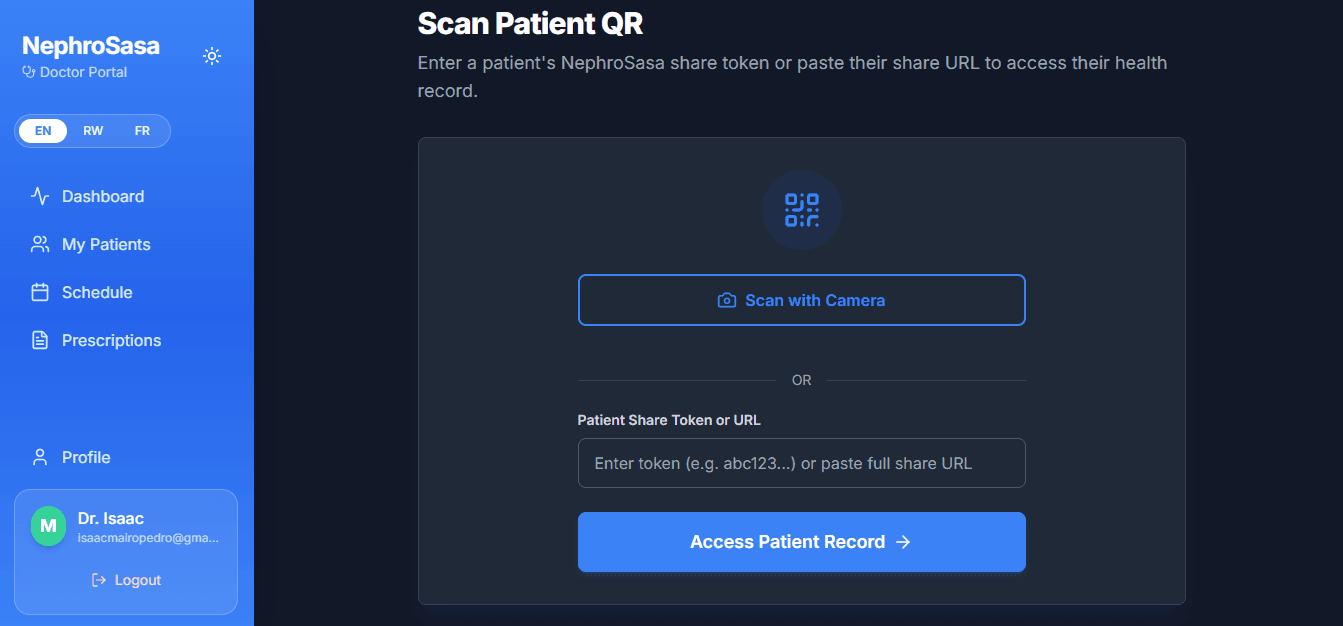
Patients generate unique QR code tokens to grant certified nephrologists instant, secure access to longitudinal blood pressure, blood glucose, and lab metrics.
Teleconsultation & Doctor Portal
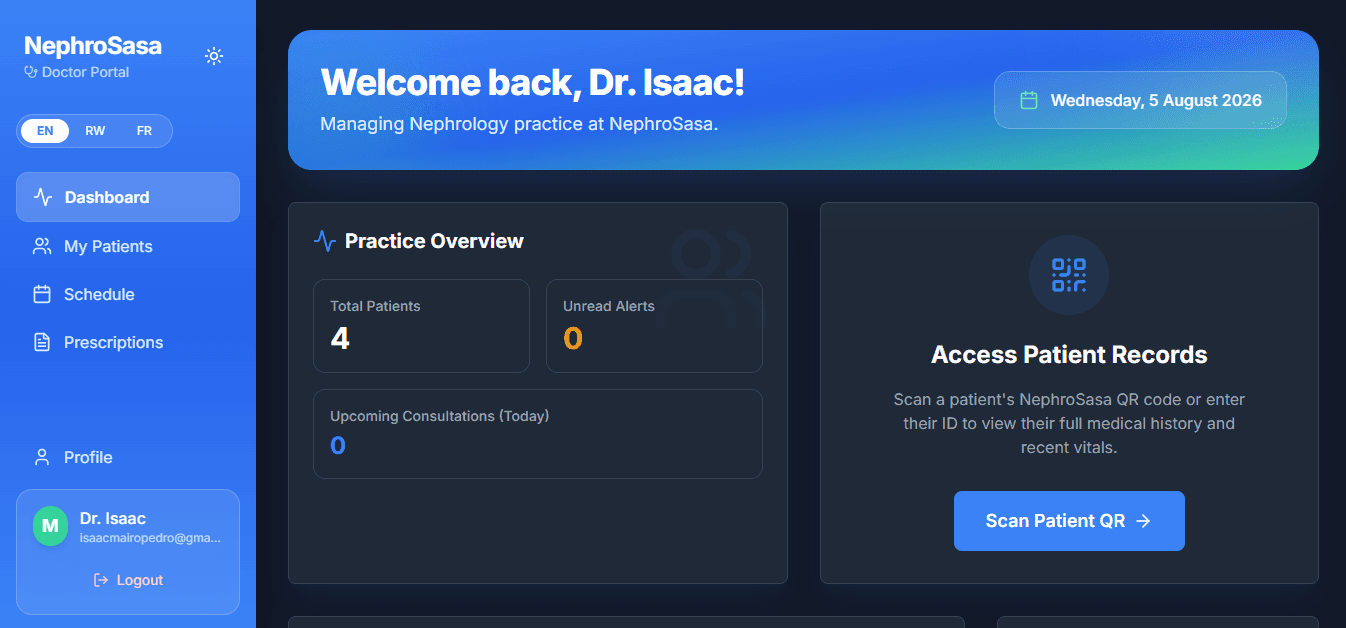
Verified nephrologists manage patient schedules, review longitudinal vitals charts, update consultation notes, and conduct virtual clinic follow-ups.
Automated Clinical Alert Pipeline
Instant automated SendGrid email notifications alert patients and care teams upon vital sign anomalies or elevated kidney risk predictions.
User Experience
Desktop Interface
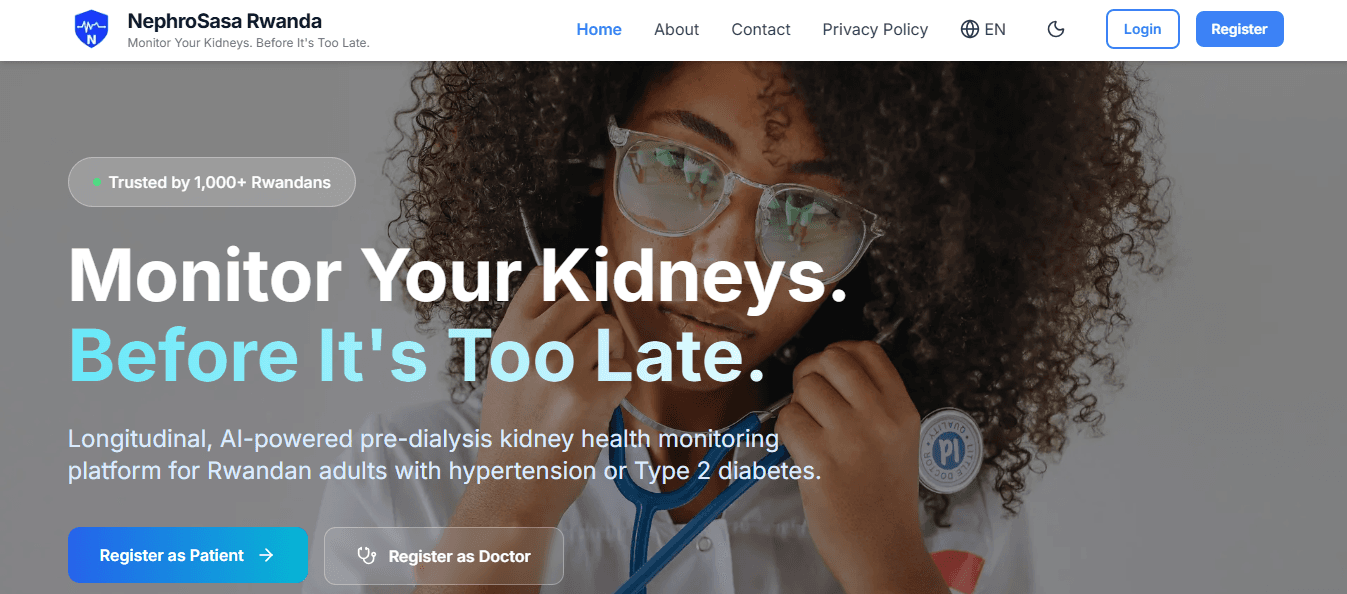
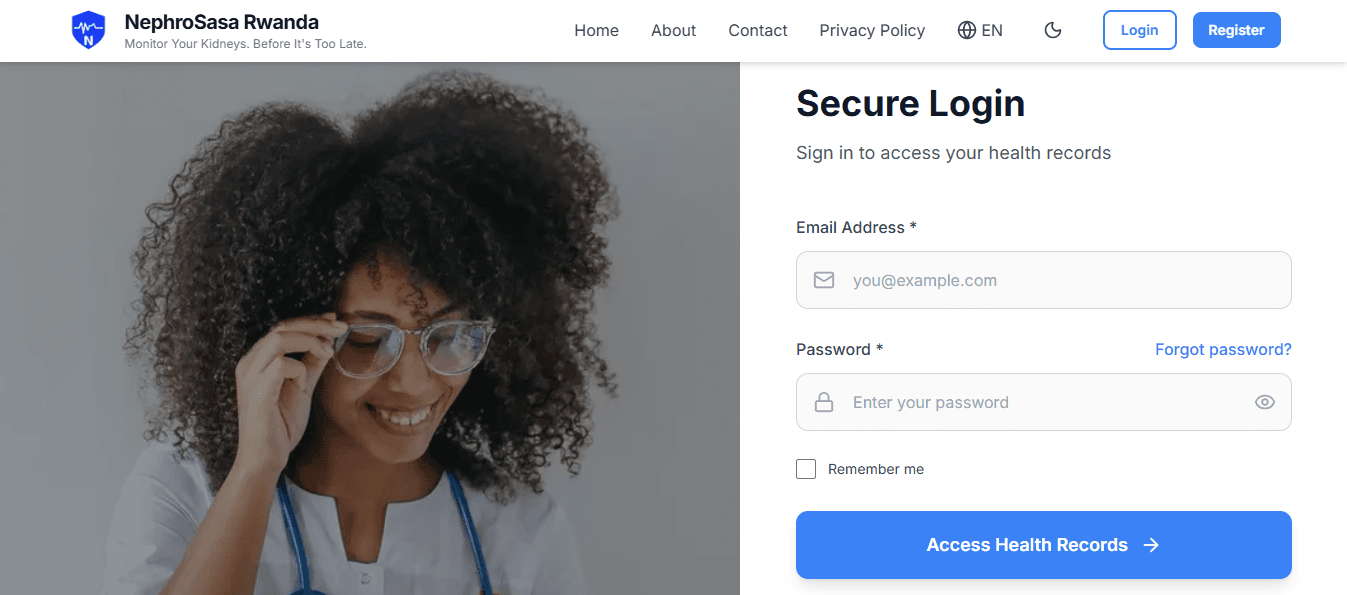
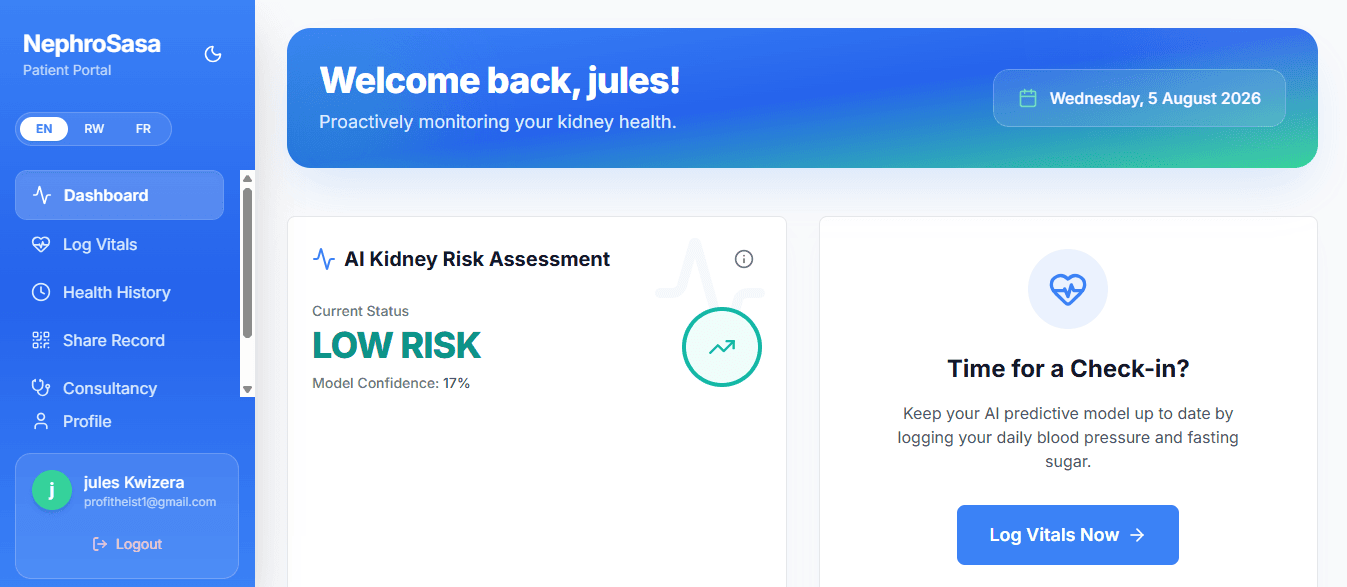
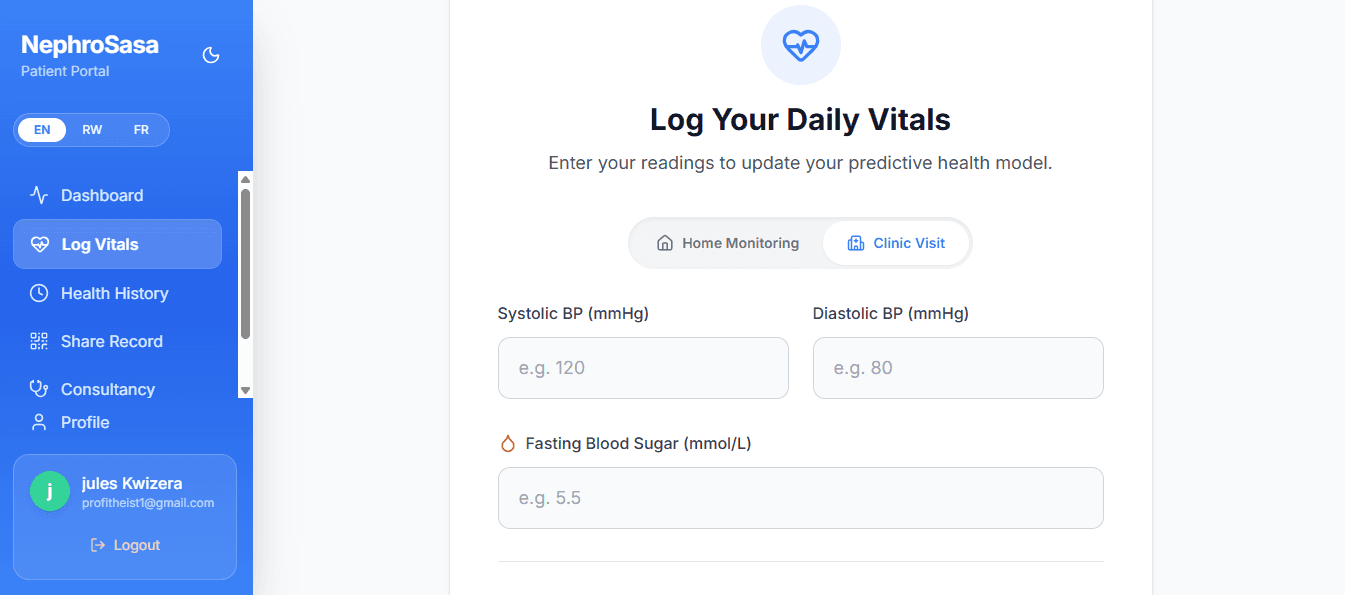
Responsive & Portable
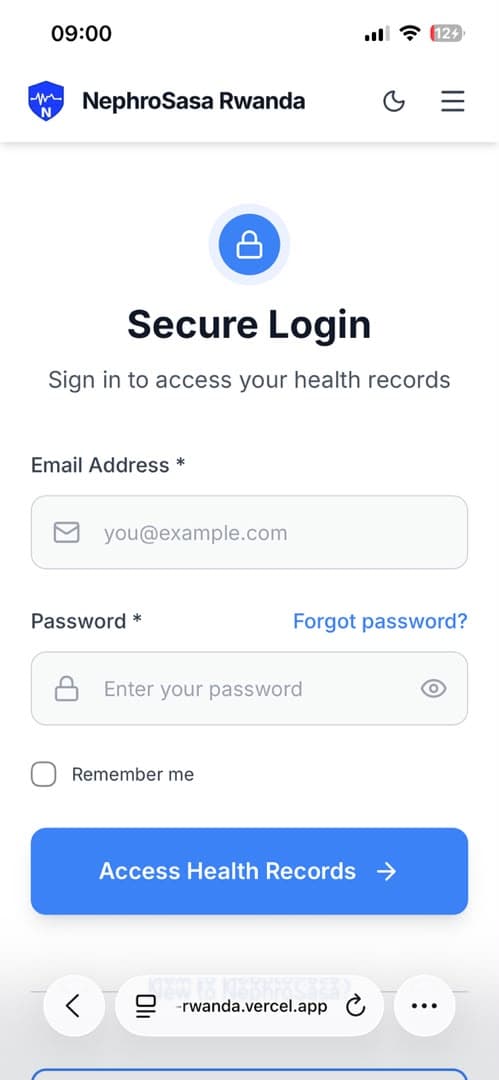
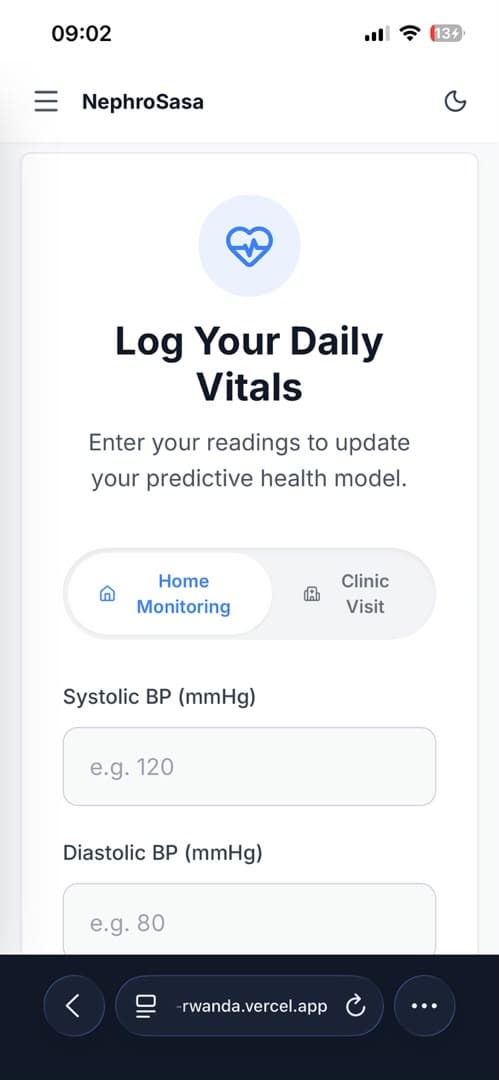
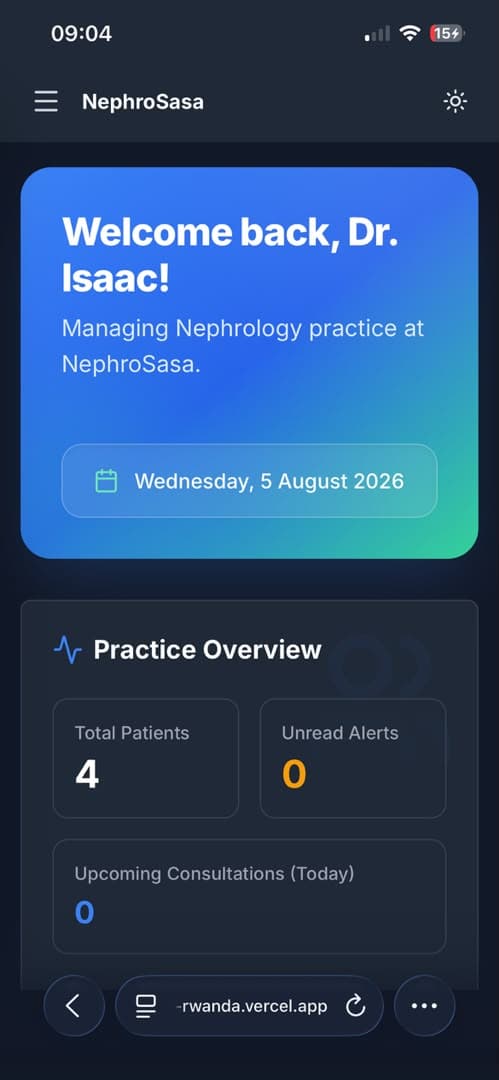
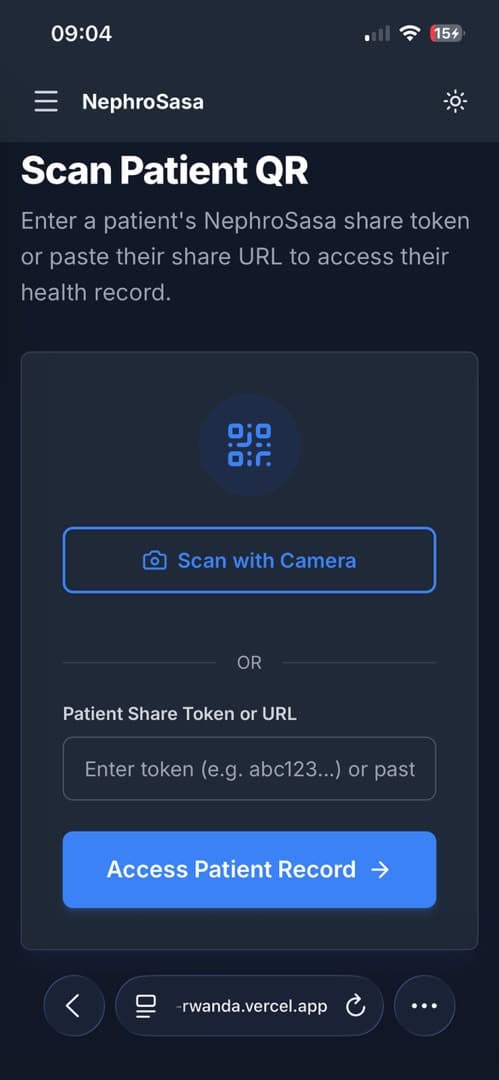
Mobile Views
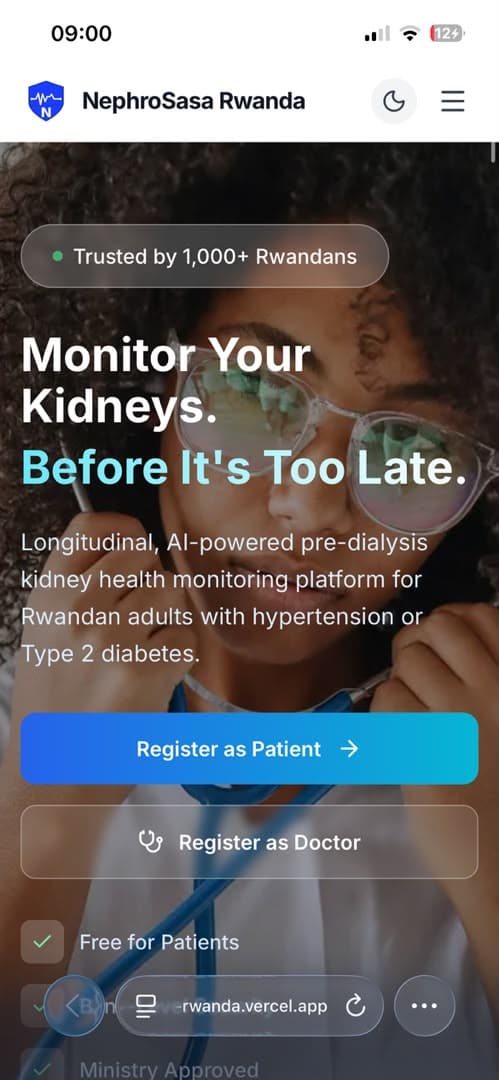
Designed for on-the-go patient vital logging and quick QR scanning in Rwandan clinical environments.
Silent Progression & Specialist Shortage
Chronic Kidney Disease (CKD) often develops without early symptoms among hypertensive and diabetic adults. In Rwanda, with fewer than 15 nephrologists nationwide, primary care centers face immense barriers to early detection.
Patients visiting different district clinics carry paper notes or no records at all, preventing doctors from detecting longitudinal renal decline until patients reach catastrophic End-Stage Renal Disease (ESRD).
AI-Powered Longitudinal Closed-Loop Care
NephroSasa Rwanda connects patients and nephrologists into a unified, digital ecosystem. Patients log vitals (Blood Pressure, Fasting Blood Sugar, HbA1c, Creatinine, GFR, BUN) over time, and an integrated Random Forest model continuously generates risk classifications.
When risk escalates, automated email notifications alert the care team, and the patient generates an encrypted QR code for instant, zero-friction medical record sharing during doctor consultations.
Engineering Rigor
Technical Problems Solved
Severe Clinical Dataset Imbalance & Risk of False Negatives
Implemented SMOTE (Synthetic Minority Over-sampling Technique) combined with StandardScaler and 5-Fold Stratified Cross-Validation on 1,659 clinical records to ensure 84.94% accuracy without missing pre-dialysis CKD cases.
Cross-Facility Patient Record Portability without Hardware Dependencies
Engineered an encrypted QR-code sharing system that allows patients to instantly grant doctors temporary, audited access to longitudinal vital logs using standard mobile device cameras.
Real-Time Clinical Escalation & Patient Alerts
Integrated automated SendGrid email alert triggers on every vital log submission, calculating risk tier shifts (Low, Medium, High) and prompting immediate nephrologist teleconsultations for at-risk patients.
Supabase PostgreSQL Connection Resilience on IPv4 Networks
Configured resilient transaction connection poolers with automated retry strategies and environment-based fallbacks to prevent DNS timeouts on cloud microservices.
Multi-Role Medical Workflow Security & Data Integrity
Implemented strict Django REST Framework JWT authentication, patient-doctor relationship mapping, and 100% automated integration test coverage across scheduling and risk estimation endpoints.
Clinical Alignment with International Nephrology Standards
Benchmarked AI risk probability thresholds (<0.30 Low, 0.30–0.60 Medium, >0.60 High) directly against KDIGO clinical stages of chronic kidney disease (eGFR and Serum Creatinine progression).
Architecture
Production Tech Stack
Academic & Clinical Impact
Project Outcome & Defense
NephroSasa Rwanda was developed and successfully defended as a BSc (Hons) Software Engineering Capstone Project at the African Leadership University (ALU). The project demonstrated how combining lightweight machine learning models with accessible mobile-first web technologies can provide proactive, life-saving pre-dialysis kidney monitoring in resource-constrained healthcare environments.
Interested in healthtech, AI, or full-stack engineering? Let's connect.
Building something in healthcare, fintech, or scalable web platforms? Let's build together.
Get In Touch